


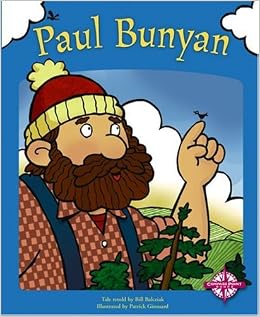
 One of our children's favorite books is Paul Bunyan (Tall Tales). It's filled with stories that are magical to children. It tells how the Great Lakes in Michigan were dug by Paul while he searched for gold. The thousands of lakes in Minnesota came from his giant footprints crossing the land. To make giant flapjacks for the enormous lumberjack, the cook needed a skillet so large it required that he tied butter to his shoes, greasing the skillet by skating while it melted.
They are tall tales, stretches of the imagination with perhaps a grain of truth, and a lot of fun! We enjoy these fanciful tales as children. We love to imagine what it would be like to see a man as tall as a house, a real unicorn, a fairy, a dragon! We are no different as adults. Deep down, we wonder what sites history has witnessed that we will never know.
 Z Z Z Z Z Z Z...........
Some say history is boring. I admit as a child to thinking as much; however, history is nothing of the sort. Ancient history, especially, is filled with myths and legends galore of fantastical creatures, gods intermingling with man, fierce beasts and quests of heroes battling against evil.
Book 2 in the series, Cumoro, opens with this quote:
"A few had been swept over to Britain, and were sent back by the petty kings. Not a man returned from the distance without his tale of marvels - furious whirlwinds, unheard-of birds, enigmatic shapes half-human and half-bestial: things seen, or things believed in a moment of terror." Tacitus, Annals 2.24
Ancient history lends itself wonderfully to the genre of historical fantasy because so many of the stories were passed down orally and recorded history is scant. Much of it is shrouded in uncertainty to this day and we may never know the whole of the story.

The book to the left, The Silver Arm by Jim Fitzpatrick, is one example of books written to tell the story of the real people in history. This one is about Nuada.
As Marshall began researching for his series, The Chronicles of Guiamo Durmius Stolo, many of the historians timed the peoples and events in his books as taking place around 5,000 B.C.; however, he once ran across a note stating some historians believe it to have been closer to B.C. 150. Marshall decided 60 B.C. was close enough. The time and place was set. Guiamo would be abandoned in 60 B.C. Gaul.
This is an example of the poetic license that author's take when crafting an epic tale such as Guiamo. The original goal is to craft a well told story, to entertain. In order to keep the story flowing and not get bogged down in the minutia, some details can be accepted as "close enough." Keeping to the facts isn't the highest priority; however, it's a wonderful thing when you can entertain AND teach. The Guiamo Chronicles does just that.

We hope you will join us on our legendary tour over the next few weeks as we explore the history behind the stories in The Chronicles of Guiamo Durmius Stolo. Come learn an ancient language with us, discover the months of the Roman calendar, travel to ancient places that still hold us mystified. Read as we discuss what the origins of the gods may have been. And why not pick up your copy of Guiamo and get started reading while we tour. We'll have a time of questions and answers with the author on down the road a bit. Invite your friends near and far.
Help spread the word ~
History doesn't have to be boring!
No comments:
Post a Comment