


Character Study, Part I
 As those who are familiar with Guiamo may know, The Chronicles of Guiamo Durmius Stolo, like many stories before them, would never have come to be if it were not for the love of a father. Having written The Princess Meredith Bedtime Tales for his six year old daughter, Marshall Best decided to begin writing stories for his other children as well. He began with 10 year old William, fashioning Guiamo, the main character in his series, after his son. Some of the characteristics of Guiamo come directly from William, now nearly 16. From the young age of five, William's mind has ever been coming up with ideas of inventions to solve problems. In the same likeness, Guiamo faces problems with an inventive mind. He does not allow himself to be bound by what is available at the time, but seeks to create a solution to a problem. When Guiamo faces an enormous boar one day out hunting, he does not admit defeat but sets to devising a way to catch his prey as shown in the excerpt below.
Guiamo’s heart leaped as he saw first the enormous snout, and then the entire head come into view. This was no ordinary pig raised in the farms around Gobedbiacum. It seemed nearly the size of an ox, larger than any he had ever seen. The tusks were each over a span in length.
Guiamo’s mind began churning the moment Gabinius finished his words. He thought of nets and snares, rocks thrown, hidden pits, and traps of flame. As his mind explored wild possibilities, by next afternoon, he finally settled on an idea, though some details had yet to be defined.
“I need an arrow, Saloni. A big arrow,” he said. “It must be as long as a spear and I need a bow designed to launch it. I want to skewer that boar with an arrow so large and powerful that the boar will drop in its tracks with a single shot. It must pierce flesh and shatter bone.”
“Why not just throw a spear?” asked Salonius.
“I cannot throw it hard enough for a certain, quick kill. I would just make him angry again,” said Guiamo. “I need this arrow, and I need a bow large enough to shoot it powerfully.”
Salonius thought about this for a moment, and skeptically asked, “Durmi, you are but twelve years old. How would you draw back such a bow?”
Guiamo understood the difficulty and said, “That I have not figured out yet, but I shall, Saloni, I shall.”
-Excerpt from Guiamo by Marshall Best
-----------------------------------------------------------------------------------------------------------
GP #2 - Cu's Ebook Giveaways 11/27 with Quiz #3
Guiamo, who is the main character of The Chronicles of Guiamo Durmius Stolo, was based on the author's son, William. William is a young man with an incredible sense of right and wrong. He feels deeply and can not abide injustice. Throughout the Guiamo Chronicles, our hero is faced with many disputes among those around him. He attempts to hand down decisions that are just, looking not only at the present dilemma but also how it will affect the people involved on down the road.
GP #2 - Cu's Ebook Giveaways 11/27 with Quiz #3
Character Study, Part II
Guiamo, who is the main character of The Chronicles of Guiamo Durmius Stolo, was based on the author's son, William. William is a young man with an incredible sense of right and wrong. He feels deeply and can not abide injustice. Throughout the Guiamo Chronicles, our hero is faced with many disputes among those around him. He attempts to hand down decisions that are just, looking not only at the present dilemma but also how it will affect the people involved on down the road.
Marshall's son, although a typical boy with a temper, is also very caring. He respects the older generation a great deal, looks out for the weak or downtrodden around him and is kind to children. These characteristics come out in Guiamo as he interacts with the brigands and their leader, Actus, the "Driven One", as well as Suadusegus, Guiamo's teacher. His actions toward them are anything but ordinary. Finding that his teacher, a slave purchased by Gabinius to instruct Guiamo in foreign languages and customs, has a wife living far away, he sends for her to come live on the estate of Gabinius alongside her husband. Suadusegus's wife Susama becomes Guiamo's teacher as well, instructing him in the ways of the Druids. As for Actus, Suadusegus states to their master regarding the bandits, "They are weary men looking to be rescued from themselves." Through quick thinking and much wisdom on the part of his teacher, Guiamo made an agreement with the brigands to end their banditry.
 William loves a battle as much as the next boy. From a young age, he has enjoyed swords and shields, playing soldiers, creating strategy to win. Guiamo is no different. If he sees a weapon that is not efficient, he improves it. Although kind and just, he does not shy away from battle. In his love of justice, he knows that fighting is necessary at times to protect what is good and right. Guiamo truly is a remarkable character.
 Of course, his parents believe William is a remarkable young man as well. The pictures for this post are from William's 8th birthday. Marshall made shields for each child coming to the party. He had a knighting ceremony where they received their shield and sword. Armed with plastic swords and wooden shields. it was mass mayhem...but all left unscathed! Marshall had also built a miniature trebuchet. Bouncy balls resembling rocks were hurled into the cul de sac at the waiting soldiers and their shields. The pictures at top is of William brandishing the sword used on the cover of Guiamo. He and his dad took several pictures that day to use for the cover of the book. In the end, the sword leaning on the stone seemed the most appropriate.
Come and join Guiamo on his adventure! Follow him as he metes out justice, helps the oppressed and battles against creatures who would enslave the people of Iath and Inisfail. You're sure to enjoy the journey. When you are done reading, let Marshall know what you thought. Leave him a note on Facebook, Goodreads or Twitter . If you have time to leave a review of the book on Smashwords, Amazon or elsewhere that would be most appreciated. It helps others to know what you thought about the series.
Please join us for the rest of the Legendary Tour. We will be talking about many other facets of the Guiamo Chronicles along the way.
----------------------------------------------------------------------------------------------------
GP #3 - The Wonderings of One Person 12/2 Quiz 6
The Stuff of Myth and Legends
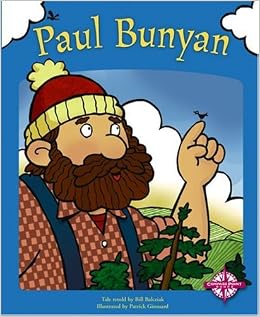 One of our children's favorite books is Paul Bunyan (Tall Tales). It's filled with stories that are magical to children. It tells how the Great Lakes in Michigan were dug by Paul while he searched for gold. The thousands of lakes in Minnesota came from his giant footprints crossing the land. To make giant flapjacks for the enormous lumberjack, the cook needed a skillet so large it required that he tied butter to his shoes, greasing the skillet by skating while it melted.
They are tall tales, stretches of the imagination with perhaps a grain of truth, and a lot of fun! We enjoy these fanciful tales as children. We love to imagine what it would be like to see a man as tall as a house, a real unicorn, a fairy, a dragon! We are no different as adults. Deep down, we wonder what sites history has witnessed that we will never know.
 Z Z Z Z Z Z Z...........
Some say history is boring. I admit as a child to thinking as much; however, history is nothing of the sort. Ancient history, especially, is filled with myths and legends galore of fantastical creatures, gods intermingling with man, fierce beasts and quests of heroes battling against evil.
Book 2 in the series, Cumoro, opens with this quote:
"A few had been swept over to Britain, and were sent back by the petty kings. Not a man returned from the distance without his tale of marvels - furious whirlwinds, unheard-of birds, enigmatic shapes half-human and half-bestial: things seen, or things believed in a moment of terror." Tacitus, Annals 2.24
Ancient history lends itself wonderfully to the genre of historical fantasy because so many of the stories were passed down orally and recorded history is scant. Much of it is shrouded in uncertainty to this day and we may never know the whole of the story.

The book to the left, The Silver Arm by Jim Fitzpatrick, is one example of books written to tell the story of the real people in history. This one is about Nuada.
As Marshall began researching for his series, The Chronicles of Guiamo Durmius Stolo, many of the historians timed the peoples and events in his books as taking place around 5,000 B.C.; however, he once ran across a note stating some historians believe it to have been closer to B.C. 150. Marshall decided 60 B.C. was close enough. The time and place was set. Guiamo would be abandoned in 60 B.C. Gaul.
This is an example of the poetic license that author's take when crafting an epic tale such as Guiamo. The original goal is to craft a well told story, to entertain. In order to keep the story flowing and not get bogged down in the minutia, some details can be accepted as "close enough." Keeping to the facts isn't the highest priority; however, it's a wonderful thing when you can entertain AND teach. The Guiamo Chronicles does just that.

We hope you will join us on our legendary tour over the next few weeks as we explore the history behind the stories in The Chronicles of Guiamo Durmius Stolo. Come learn an ancient language with us, discover the months of the Roman calendar, travel to ancient places that still hold us mystified. Read as we discuss what the origins of the gods may have been. And why not pick up your copy of Guiamo and get started reading while we tour. We'll have a time of questions and answers with the author on down the road a bit. Invite your friends near and far.
Help spread the word ~
History doesn't have to be boring!
----------------------------------------------------------------------------------------------------------
GP #4 - Tressa's Wishful Endings 12/3 Quiz 7
Calendars and Languages of the Guiamo Chronicles
If you’ve been following the tour and have read the excerpts from the Guiamo Chronicles, you discovered names of some strange sounding months!
Old Celtic Months Modern Day Roman Months
Anagantios January/February Ianuarius
Ogronnos February/March Februarius
Cutios March/April Martius
Giamonios April/May Aprilis
Simivisonna May/June Maius
Equas June/July Iunius
Elembiu July/August Quintilis
Aedrinias August/September Sextilis
Cantlos September/October September
Samonios October/November October
Dummanios November/December November
Rivras December/January December
Commonly Used Latin Words Commonly Used Old Irish & Pritana Words
oppidum - Fort Ard ri - high king, literally, "High horse rider"
Druidae - druid Drui - druid
Druides - druids Druide - druids
scorpio - giant crossbow bocoit - shield
gladius - Roman short sword Bandrui - female druid
clavicula - key bairgen - loaf of bread
clostellum - lock claideb - sword
legio - legion coimetaid - guardian
milites gregarius - veteran soldier coiced - division
pugio - dagger cruisech - spear
passum - paces longphort - encampment
volumen - scroll Ri Coiced - king of a division of the Cruthin
regnator - king Ri Tuaithe - tribal king
Mare Internum - Mediterranean Sea Ignu-al - light
----------------------------------------------------------------------------------------------------------
GP #5 - Bookworm Lisa 12/4 Quiz 8
Ancient Holidays
The Chronicles of Guiamo Durmius Stolo are fantasy novels; however, they are so much more than just entertainment. They are historical fantasy in which the author has taken the utmost care to hold true to actual history, myths and legends within the frame of his story line. All battles in book one are real battles that Mr. Best has described as best he could. As in other historical fiction novels, he takes known facts and fashions a story around those facts to fill in the gaps of what we do not know. What makes it fantasy is the fantastical creatures and magic that accompany it.
Three celebrations are mentioned in the novels which were actual ancient holidays. Marshall Best gives plausible reasons for the institution of these celebrations.
Samfuin
Although the more modern name for it is Samhain, this name was actually derived from the Old Irish word Samfuin, which Marshall uses in his books. Read below how Samfuin was celebrated in the story of Cumoro and why in the excerpt below from book two of The Chronicles of Guiamo Durmius Stolo.
“Our men have fought in battle against the Fomori many times and came away victorious. Torques and arm bands have been awarded to the brave who survived the battles. And yet, these men and women we have honored are not the only ones who gave us a land free of the vile orcs and Luprech hounds; a land where our sons and daughters can be raised in safety. Many of our sons and brothers have fallen in battle, and the memory of their brave deeds must also be preserved for all the ages.
“I declare that the day of the full moon of this month, the month of Samonios, shall be a day of remembrances, of telling our children of Nuada and the valor of our dead, of victory, and of a land strewn with orc corpses, for our dead must be remembered. It shall be a day of celebration, of song and feasting, and demonstrations of swordplay and horsemanship.”
Guiamo could see from the smiles forming on the faces of his men that his plan was met with tremendous approval. He continued, “Each tribe shall build a fire upon this field where you now sit to remind us of the deceiving fires I set upon the plain of Tuired where Nuada was slain to confuse the orc host with the direction of our attack.
“In the midst of these fires, we shall create a great bonfire which shall burn throughout the long hours of the night to symbolize the huge pyre needed to burn the corpses of the orcs.
“Before the sun sets on that day, all the fires in the homes around Temair shall be extinguished. Then the hearth fires shall be lit anew from the great bonfire, in remembrance that only through the deaths of the Fomori could our homes be made warm and secure.
“The rekindling of the fires is to be a constant reminder that we must slay and burn all our enemies who threaten our lands in years to come. The lighting of the fires in our homes must be done to remind us of the brutal battles we endured this summer.
“This day of celebration shall mark the end of this year of bloodshed and the beginning of a new year where the Pritana and Cruthin dwell in peace in the land.”
Lughnasadh and Belotenia
Lughnasadh and Belotenia are two other ancient holidays that were celebrated. You can see below how Best has woven these seamlessly into his story in this excerpt from book 3, Morlanos.
“Speaking of celebrations, I have been thinking of proclaiming two new festive days for us to celebrate.”
Abartach was intrigued, “What would you propose, Mórlános?”
Guiamo replied, “We remember the Pritana dead who fell to the Fomori and speak of their valor. Some have come to call that day Samfuin, referring to the celebration to be forever held at the end of each summer, but there is more that must be celebrated. What our brothers did must always be remembered, but I wish to specifically honor Nuada who fell in battle. That battle upon the field of Tuired occurred in the month of Giamonios and I should like to begin this celebration by lighting fires at night to remember the juniper fires I lit to face the Fomori slóg of the orcs Balor, Indech and Tethra in the wrong direction. On this day we shall honor the memory of Nuada.”
Abartach replied, “This is a worthy event, significant to both Pritana and Cruthin. I am in agreement that it is worthy of remembrance. What other celebration do you propose?”
Guiamo answered, “I wish to remember the final destruction of the Fomori, the day when the last orcs and Luprech hounds were slain in the month of Aedrinios. It should be not so much focused on them, but rather upon us, a time of new beginnings and peace, the day that peace came at last to our land. It was a day when we could build our homes and take the harvest from our fields without fear of fire and death. It should be a day of dancing and feasting, of joyous song and games of strength and skill, and of families reuniting in peace.”
Abartach asked, “These days must be given names for all to use. Have you given thought to this?”
Guiamo replied, “Belotenia is a word which means ‘lighting of the bright fires.’ This would be fitting as a name to honor Nuada. I have not decided on a name for the festive days of renewal from the destruction of the Fomori.”
Abartach answered, “We should celebrate this as a day to honor you, Mórlános. We shall name this day Mórlánosnasadh, the ‘assembly of Mórlános.’ ”
Guiamo demurred, saying, “But I am known by many names. To Etarlám’s people, I am Cúmóro. Some remember me as Lugh, and only recently have I become known as Mórlános. To Ursius, I am Guiamo, the name given to me by my mother and father.”
Sreng laughed and said, “I do not care what others may call me, just so they call me for supper.”
Abartach smiled at Sreng’s jest and nodded in agreement. He turned back to Guiamo and said, “The people will use whatever name for you with which they are familiar. Whether it be Mórlánosnasadh, Lughnasadh, or Cúmóronasadh, they will all love you for the deliverance you brought and give honor to your memory.”
Sreng nodded in enthusiastic agreement. “It shall be as you say among both our peoples. Over the next days we will send word across the land to announce this so that all may participate in their lands as we shall at Temair.”
----------------------------------------------------------------------------------------------------------
GP #6 - Pieces of Whimsy, w/ Quiz #11 to be posted on 12/8
Ancient Craftsmen
As the author of The Chronicles of Guiamo Durmius Stolo will discuss elsewhere on the tour, according to ancient texts, the gods of ancient mythology were mere men honored with god-hood due to their incredible accomplishments. The Tri Dee Dana or the three gods of art are a good example. According to Wikipedia, these three brothers were Credne, the goldsmith, Goibniu, the smith of the Tuatha De Danann and Luchtaine, the carpenter. These three men or "gods" were said to have forged the weapons which the Tuatha De used to battle the Fomorians.
These three brothers were master craftsmen and in the adventures of Guiamo, they move back and forth between England and Ireland helping to craft whatever is needed. One fun example of something that was crafted by Credne was a clostellum or lock, with a very special key, clavicula. The reason this is fun is that it shows how authors put a part of themselves into their stories. Marshall Best is from a family with a long history in the locking industry. He is involved in collecting locks and knows a lot about ancient locks as well. In book four, Inis Emain Ablach, Credne constructs a lock to protect Guiamo's armory which is full of not only regular weapons but god weapons as well. Read below as Credne warns Guiamo to be careful and explains how his clostellum works.
Credne complied
and sat beside him in order to share the sparse shade. They sat in silence, Guiamo for his
weariness, and Credne for his virtue of patience. In the end, Guiamo asked with head leaned
back and eyes closed, “How does your work fare?”
With a tone of
complete satisfaction, Credne answered, “It is completed.”
Guiamo asked,
“May I have the clavicula?”
To his
surprise, Credne replied, “Not until I explain its workings.”
Guiamo said, “I
understand how to work a clostellum.”
Credne answered
with a sly grin, “Not this one.”
Intrigued,
Guiamo opened one eye and said, “Now you have tickled my curiosity. When will you be ready to show it to me?”
Credne was
patient, but leaped at the opening Guiamo gave him, “Now would suit me.”
Guiamo sighed,
but acquiesced. Though weary and spent,
Guiamo strapped on his worn-out caligae,
his heavy-soled, sandal-like Roman military shoes, rose to his feet to join his
friend and they set out through the camp with Credne leading the way.
Not
surprisingly, Credne brought Guiamo to the armory to show off his
handiwork. The clostellum had been crafted of iron and embellished with symbols
significant to the Cruthin people, and set into the stout, iron-reinforced
door. He removed the cleverly shaped clavicula from his own finger and
inserted it into a curiously shaped hole as he explained how it worked.
Having lived
with Gabinius and worked extensively around the smithy, Guiamo was fairly
familiar with the inner workings of a clostellum,
and listened patiently as Credne explained how it worked. To his delight, Credne had crafted an
ingenious device into the body of the clostellum. The master craftsman explained that if
someone should rotate the clavicula
without first sliding a decorative piece to the left, four long, hooked iron
spikes would snap out from small holes in the clostellum, and lurch inward, impaling the hand which held the clavicula, and trapping the thief.
With great
admiration for his ingenuity, Guiamo scrutinized the case cover of the clostellum as Credne pointed out the
four small holes through which the spikes would be thrust.
Credne said,
“It is not enough to have possession of your clavicula to gain entrance.
The trick to this clostellum
must also be known. Do not tell anyone
its secret.”
Guiamo was
delighted at the extra measure of security and replied, “No, of course not.”
The master
craftsman handed the clavicula to
Guiamo who slipped it as a ring upon his left index finger for
safekeeping.
The Romans had clever mechanical devices but what is even more interesting is that the type lock described in Best's story was actually built by an Arab in the Middle Ages. He has read an article about it written by his lock collector friend, Bob Dix. In many ways, Guiamo is an idea man. He often thinks up a design and will have his craftsmen construct it, making Credne, Goibniu and Luchtaine integral parts of the story.
----------------------------------------------------------------------------------------------------------
GP #7 - Mother Daughter Book Reviews w/ Quiz #12 to be posted on 12/9
Ancient Gods
One of the fundamental background issues in the Guiamo Chronicles are the role of the gods. Today, we typically think of the Roman and Greek gods to be like what we find in movies like Percy Jackson. For instance, Hades is seen as the arch-villain with diabolical powers from the depths of fiery hell. Yet, the Romans record him to be quite the opposite. He was considered by the Romans to be a gentle and benevolent person who cares for the souls of the dead. More importantly, the ancients recognized openly that the gods were mere men who, upon their deaths, were given the honors of godhood. It is a form of ancestor worship.

They gave their ancestors (particularly their inventive ancestors) the position of god, demigod, hero or man based upon the degree of their discoveries. If for instance, someone invented music, they would become the god of music. If someone invented a subset of this, for instance a flute, they would be honored as a demigod. If they invented a lesser thing, such as a particularly beautiful song, they would be a hero. Many of the gods were great inventors and are described as so in the ancient writings. Even the Egyptians recognized much of this. They divided their own history into four ages. The age of the gods, the age of the demigods, the age of the heroes and the age of the pharaohs.

Now in ancient Britain, the gods were found in the hundreds. They would also be an ancestor honored with godhood. Their domain might simply be over a particular stream or well, or perhaps a village, or if they were significant enough to the entire tribe, they would be a great tribal god. But in truth, the gods of old were mere men and women who were honored with godhood.
This is how they are portrayed throughout the Guiamo Chronicles and I think the reader will find this very intriguing.
-----------------------------------------------------------------------------------------------------------
When Guiamo Takes a Stroll
While writing the Guiamo Chronicles, Marshall Best would often joke with family and friends about ideas for titles of the book. Silly titles such as "Fishing Time for Guiamo" and "Guiamo Takes a Stroll" were thrown out. When I asked him for ideas for this post, he said jokingly, "Guiamo Takes a Stroll." I decided why not! Marshall hopes to travel to England and Ireland someday to see and experience the places in his novels. We asked him to share where he would plan to visit. We hope it will give you a taste of the extent to which these countries and their history are involved in The Chronicles of Guiamo Durmius Stolo.
"There are several historic places I would love to visit in Britain and Ireland that are included in the Guiamo Chronicles. Much takes place in Wales, so while certain famous sites such as Caer Londein (London) and Caer Ebrauc (York), are mentioned and play their role in the story, I’d spend more time exploring the remains of Caer Usk (Caerleon), and other iron age forts such as Caer Deva and Din-Gwrygon on the Wriken. There is a Roman city of Bullaeum that went by the name Ebocella before the Romans arrived, and this plays an interesting part of the story as the chief city of a contentious tribal chieftain. Stonehenge is mentioned, but not by name, and it has an interesting purpose for the Fomori which dominate much of the island."
"Din-Gwrygon is a central location for much of the stories. Guiamo has befriended the tribal king, Ruadri, and this has become his home away from home. Ursius also lives here as do many of his other friends, Aoi, Crinchinbel, the Druid, Abartach, and Bé Chuille, a valiant woman who wins great battle honors. Caer Usk is the site of an armory that Guiamo has built wherein he keeps the god-forged tools he uses to build powerful weapons he needs to fight dragons, trolls and even the gods."
"In book 5 yet to be released, there is a rock quarry near Barry hard against the ocean that dates back to this time and plays a role in the story. That’d be a wonderful thing to see. I’d love to be able to walk these sites and visualize the forts and the battles fought there in my stories. As an author, I hope that my descriptions are true to the actual topography and no glaring mistakes are ever discovered."
"In Ireland, probably the foremost site is the hill of Tara which plays a prominent role in the story. That would be fabulous to explore. The chief cities of Leinster, Ulster, Munster, Mide and Connacht are described by the names Emain Macha, Caisel, Almu, Cruachan (though I call it Slaet-Ceite which has the same meaning) and Temair. I’d love to explore the region around Killarney where some primary characters eventually come to settle."
"Now, I took the liberty to create a city which I named Gaidibmáin. It would lie between Waterford and Wexford. I could walk the beach there and show where the Cruthin people landed and created their first foothold city, which became so pivotal in the Guiamo Chronicles. I could look out to see where the island is, and there I could picture dragons fighting against ships at sea as they raced toward the safety of land."


Christy Nicholas has generously offered a free copy of her e-book on Ireland to go along with an e-book of Morlanos. Her book not only has pictures of hidden places in Ireland but discusses some of the history involved which you will find woven into Morlanos.
To read more about Christy and her love of Ireland, visit the Guiamo Chronicles Blog later during the tour.
To read more about Christy and her love of Ireland, visit the Guiamo Chronicles Blog later during the tour.
----------------------------------------------------------------------------------------------------------
GP #9 - It Started With A Clik w/ Quiz #15 12/12
In writing historical fiction or fantasy, one of the author's goals is to meld the story with true people, times and places. Sometimes this can be difficult as the story line and the facts don't meet. Marshall Best, author of The Chronicles of Guiamo Durmius Stolo, discusses a particular time when he was faced with this dilemma and his surprise at the solution.

"I think one of the most astonishing coincidences in writing this story occurred when I was studying a modern map of Ireland. I was looking for a big lake west of Cashell, Ireland for a particular episode that was significant enough to fit the storyline. Now each page on this atlas covers only about 75 x 60 km. To my dismay, I discovered there is only a single lake, Lough Gur, on the regional map. It lies south of Limerick which is at the top of this map, and is a very small lake, totally inadequate for my story. The rest of that map has nothing at all.
GP #9 - It Started With A Clik w/ Quiz #15 12/12
When Fact and Fiction Meet
In writing historical fiction or fantasy, one of the author's goals is to meld the story with true people, times and places. Sometimes this can be difficult as the story line and the facts don't meet. Marshall Best, author of The Chronicles of Guiamo Durmius Stolo, discusses a particular time when he was faced with this dilemma and his surprise at the solution.
"I think one of the most astonishing coincidences in writing this story occurred when I was studying a modern map of Ireland. I was looking for a big lake west of Cashell, Ireland for a particular episode that was significant enough to fit the storyline. Now each page on this atlas covers only about 75 x 60 km. To my dismay, I discovered there is only a single lake, Lough Gur, on the regional map. It lies south of Limerick which is at the top of this map, and is a very small lake, totally inadequate for my story. The rest of that map has nothing at all.
"I was stumped and wondered how I would get out of this dilemma. Now that part of the story pertains to a stone that was discovered that is red and white and looks like a big eyeball, and is involved with activities at a big lake. Then I turned to the map just north of Limerick, and there I found an enormous lake, Lough Derg. Wonderful! Problem solved.
"Then I read the meaning of its name. It means “loch of the Red Eye.” Who would have thought such a coincidence would present itself so fittingly. An astonishingly perfect fit and ideal location. So there you go. Guiamo travels for his adventure to the shore of Lough Derg between Ballina and Portroe by the Arra Mountains."
No comments:
Post a Comment